Migraine Headaches
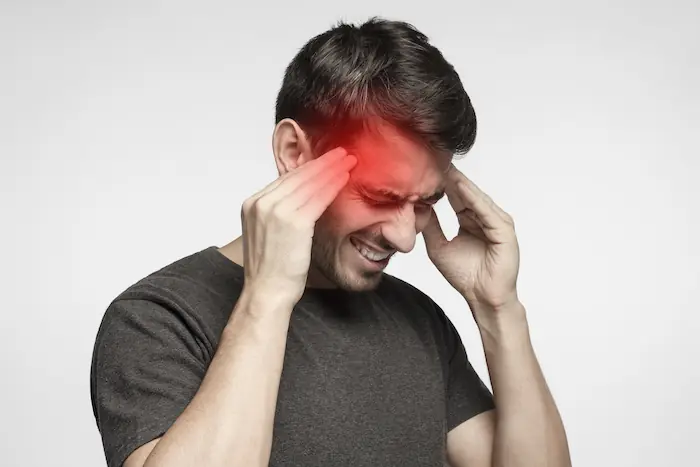
What is Migraine?
Migraine is a complex neurological condition characterized by recurrent attacks of moderate to severe throbbing headache. It is often accompanied by nausea, vomiting, and extreme sensitivity to light (photophobia) and sound (phonophobia). It is not "just a headache" but a systemic disturbance affecting the entire organism.
Symptoms & Stages
Migraine attacks often progress through four stages, though not everyone experiences all of them.
Occurs one or two days before a migraine.
- symptoms: Constipation, mood changes (from depression to euphoria), food cravings, neck stiffness, increased thirst and urination, frequent yawning.
Can occur just before or during the migraine. These are reversible symptoms of the nervous system.
- Visual phenomena: Seeing various shapes, bright spots, or flashes of light.
- Vision loss.
- Sensations: Pins and needles sensations in an arm or leg.
- Speech: Difficulty speaking clearly.
A migraine usually lasts from 4 to 72 hours if untreated.
- Pain: Usually on one side of your head, but often on both sides. Pain that throbs or pulses.
- Sensory: Sensitivity to light, sound, and sometimes smell and touch.
- Physical: Nausea and vomiting.
After the attack, you might feel drained, confused, and washed out for up to a day. Some people report feeling elated. Sudden head movement might bring on the pain briefly again.
Causes & Triggers
While the exact cause is still researched, genetics and environmental factors appear to play a role. Homoeopathy views these "triggers" not as the cause, but as the exciting factors acting upon a susceptible constitution.
Hormonal Changes
Fluctuations in estrogen, especially before or during periods, pregnancy, or menopause.
Dietary Triggers
Aged cheeses, salty foods, processed foods, aspartame, alcohol (especially wine), and caffeine.
Stress
High stress at work or home is one of the most common triggers.
Sensory Stimuli
Bright or flashing lights, loud sounds, and strong smells (perfume, paint thinner, etc.).
The Homoeopathic Approach
Conventional medicine often focuses on abortive (stopping an attack) or preventative (daily medication) strategies. Homoeopathy offers a third path: Constitutional Cure.

In homoeopathy, we understand migraine as a cry for help from the vital force. The pain is a signal of deep internal disharmony. By identifying a remedy that matches your unique physical, emotional, and genetic makeup, we aim to:
- Reduce Frequency: Increase the gap between attacks naturally.
- Reduce Intensity: Make the attacks manageable without heavy medication.
- Reduce Duration: Shorten the suffering time.
- Eliminate: Eventually, help the body outgrow the tendency to develop migraines.
Why Individualization Matters
Two people with "Migraine" will likely get different remedies.
- Person A: Right-sided pain, relieved by cold applications, irritable during pain. (Remedy: Sanguinaria, Belladonna, etc.)
- Person B: Left-sided pain, wants warm applications, weeps during pain. (Remedy: Spigelia, Pulsatilla, etc.)
Common Remedies (Therapeutics)
Professional Guidance Recommended
While these descriptions help understand the scope of homoeopathy, migraine is a chronic condition requiring professional case-taking for a permanent cure. Self-regulation is not recommended for chronic cases.
Belladonna
Indication: Sudden, pulsating headache with a hot, red face. Better: Sitting up, cold applications. Worse: Light, noise, jarring motion.
Natrum Muriaticum
Indication: Chrome migraine from grief/stress. Visual aura ("blind headache"). Better: Dark, quiet room, tight pressure. Worse: Sun (10am-3pm), heat, sympathy.
Glonoinum
Indication: Congestive headache from heat/sunstroke. Blood rushes to head. Better: Cold applications, open air. Worse: Sun, heat, stooping.
Iris Versicolor
Indication: "Sick headache" with intense acidity/vomiting. Blurred vision. Better: Gentle motion. Worse: Resting (weekend migraine).
When to See a Doctor
Red Flags (Seek Immediate Help)
Consult a doctor immediately if you experience:
- "Thunderclap" headache (worst headache of your life, sudden onset).
- Headache with fever, stiff neck, confusion, seizures, or double vision.
- Headache after a head injury.
- New headache pain if you are over 50.
Lifestyle Management
- Sleep Hygiene: Establish regular sleep and wake times.
- Hydration: Dehydration is a major trigger. Drink adequate water.
- Stress Management: Incorporate yoga or meditation.
- Dietary Diary: Track your food to identify and eliminate personal triggers.
FAQ
Yes, in many cases, constitutional treatment can completely resolve the tendency to develop migraines. In advanced cases, significant relief and management are almost always possible.
This depends on the chronicity (how long you've had it) and the suppression (previous medication use). Improvement is usually seen within the first few months.
Yes. We often start homoeopathy alongside your conventional medication and slowly taper the latter as your natural health improves.
Disclaimer: The information provided regarding Migraine Headaches is for educational purposes only and does not substitute for professional medical advice. Homoeopathic care is highly individualized.